Your child’s vision is a key part of how they learn, play, and experience the world. At Capitol Optometry, our team knows that regular eye exams help support their development every step of the way—from their first smile to their first home run. Think of it as a simple, important check-in for their health.
So, how do you keep their vision on track? A pediatric eye exam is a straightforward process that checks your child’s overall eye health, confirms their eyes work well together, and supports their learning and activities. The goal of children’s eye exams is to offer a personalized look at their vision to help them thrive.
Why Your Kid’s Eye Health Is a Big Deal
A pediatric eye exam is about more than just checking if your child needs glasses. It’s a complete look at their eye health to support them in the classroom, on the playground, and everywhere in between.
More Than Just an Eye Chart Test
During an exam, the eye doctor looks at the health of the eye itself—both inside and out. Unlike a simple vision screening, comprehensive eye exams help confirm that everything is developing correctly and can catch potential issues early on.
How Eyes Work as a Team
Good vision also depends on how well both eyes work together. An eye exam can determine if your child’s eyes are teaming up correctly. This skill is important for everything from catching a ball in the backyard to following words across a page when they read.
Support for School and Sports
Clear and comfortable vision can make a huge difference in your child’s ability to focus at school and perform their best during sports.
A Timeline for Your Child’s Eye Exams
Knowing when to schedule eye exams can help you stay on track with your child’s visual health. Here’s a simple timeline to follow.
The First Visit: 6 to 12 Months Old
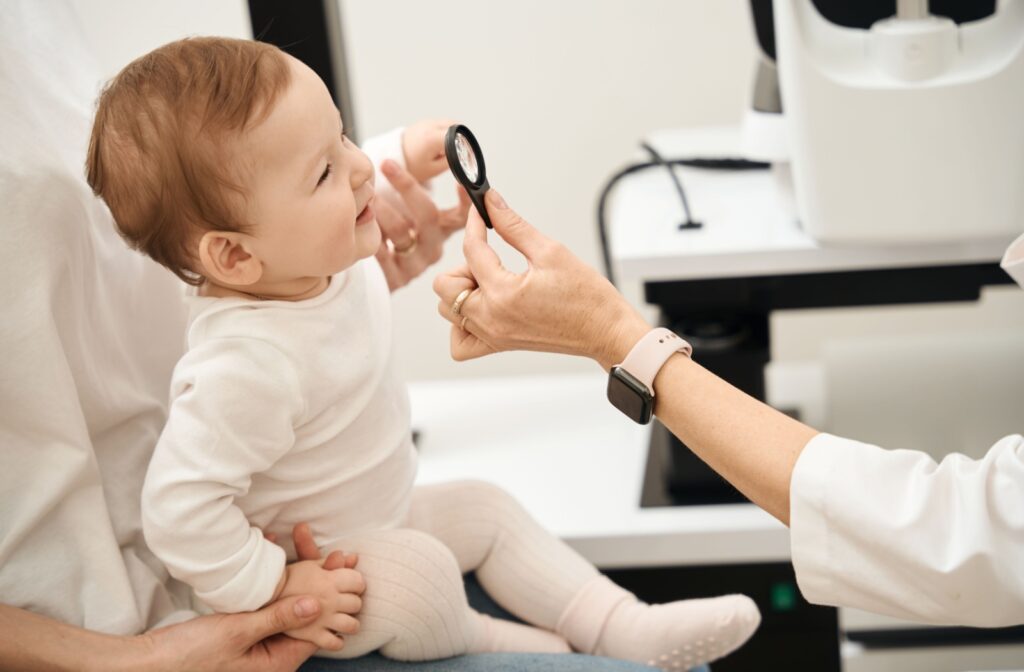
Your child should have their first eye exam when they are between 6 and 12 months old. This initial visit screens for early signs of eye conditions and checks that their vision is developing as expected, a critical component of healthy infant vision.
Toddlers: 3 to 5 Years
It’s a good idea to schedule another exam just before your child starts school, which allows time to have their eyes examined for any issues that could interfere with learning.
At this stage, your child is typically more cooperative and can participate in simple vision tests. Our eye doctor can assess visual acuity, depth perception, and color vision while checking for common childhood eye conditions.
School-Age Children: 6 Years & Older
Once your child starts school, an annual eye exam becomes essential. Clear vision is critical for learning and development, helping children stay focused in the classroom, keep up with assignments, and participate confidently in activities both at their desk and on the field.
What Happens at a Kid’s Eye Exam?
The goal is to make eye exams a comfortable and even fun experience for your child. The team uses kid-friendly approaches to help your little one feel relaxed from start to finish.
A Fun and Friendly Welcome
From the moment you walk in, the focus is on creating a welcoming space for families. A positive experience helps your child feel at ease and builds a good foundation for future visits.
Tests That Feel Like Games
Many of the tests for young children are designed to feel like games. Instead of reading letters, your child might be asked to identify fun shapes, look at pictures, or follow a light—making the process engaging and stress-free.
A Chat with the Eye Doctor
After the exam, the eye doctor will sit down with you to discuss the results in simple, easy-to-understand terms. You’ll have plenty of time to ask questions and talk about any next steps for your child’s vision.
Signs Your Child Might Need to See an Eye Doctor
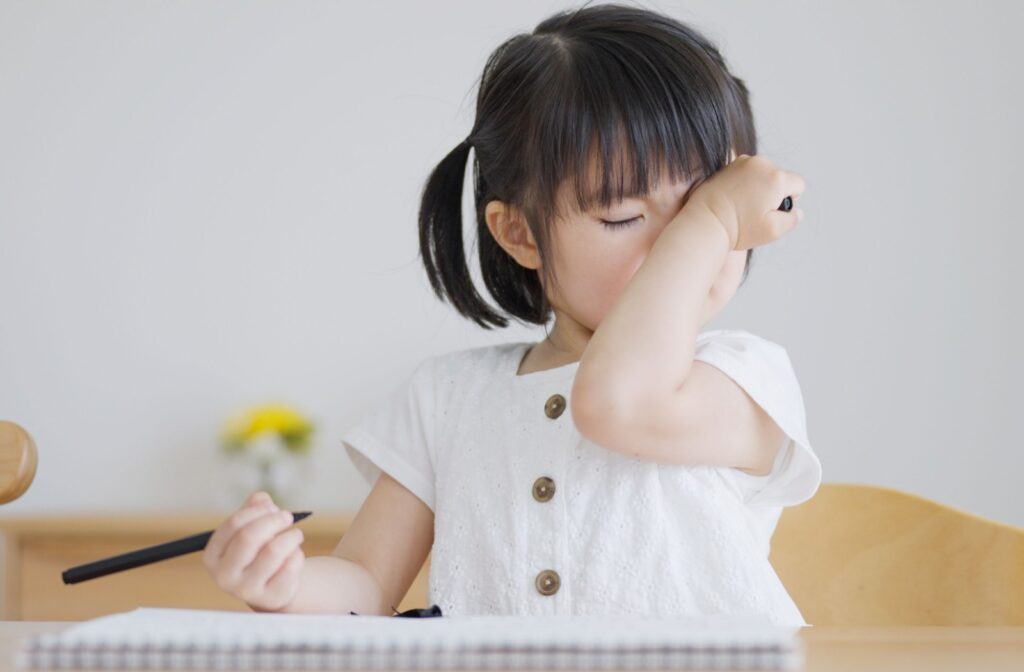
Even if you think your child sees just fine, it’s good to keep an eye out for certain behaviors between appointments. Some of these signs can be indicators of conditions like amblyopia (lazy eye). If you notice any of the following, it may be a good time to schedule a visit with an eye doctor in Sacramento:
- Frequent eye rubbing
- Squinting to see things far away or up close
- Tilting their head to one side
- Covering one eye to read or watch something
- Sitting too close to the TV or holding books close to their face
- Complaints of headaches or tired eyes
Modern Vision Solutions for Kids
If your child needs vision correction, there are more options available today than ever before. These solutions are designed to fit your child’s active lifestyle while supporting their long-term eye health.
Myopia Control for Kids
Myopia, or nearsightedness, is a common condition where distant objects appear blurry. Myopia control is an approach that aims to slow down how quickly nearsightedness progresses in children and teens, using options like specialized lenses.
Myopia is becoming more common in children, which is why managing it early is so helpful.
What Are Stellest Lenses?
Stellest lenses are a type of spectacle lens designed for children with myopia. They do 2 jobs at once: they help your child see clearly and help slow the progression of their nearsightedness as they grow.
These lenses look just like regular glasses, making them an easy and comfortable option for children to wear throughout the day. Early intervention with myopia control options like Stellest lenses can help reduce the risk of higher levels of myopia later in life and support long-term eye health.
Take Care of Their Eyes
Regular eye exams are a simple and effective way to support your child’s health, learning, and fun from infancy through their school years. A comfortable and customized eye care experience can make all the difference. Our friendly team at Capitol Optometry is passionate about helping your family with your unique eye health needs. If you’re looking for a comprehensive eye exam or want to learn more, schedule an appointment with us today.