

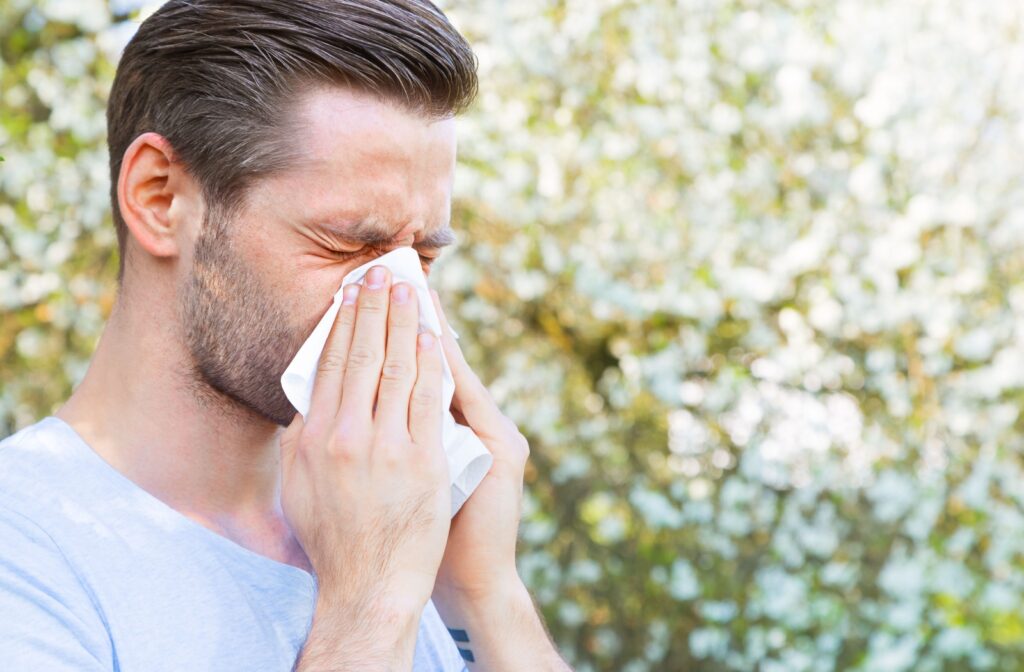
You rub your eyes constantly during allergy season, wondering if your dry eyes are making your allergies worse. Your eyes feel scratchy and irritated, but you can’t tell if it’s from allergens floating around or just plain dryness. That’s where our team can help you understand what’s happening with your eyes and find the right solutions for your specific needs. Getting a proper evaluation helps you figure out which condition is causing most of your discomfort, so you can manage symptoms more effectively.
Dry eye doesn’t directly cause allergies, but it can make allergy symptoms feel much worse and harder to manage. When your tear film doesn’t work properly, allergens stick around longer and cause more irritation than they normally would.
How Dry Eyes and Allergies Connect
Your tears normally wash away pollen, dust, and other irritants before they can cause problems. When you have dry eye, this natural cleaning system breaks down. Allergens may sit on your eye surface longer, giving them more time to trigger reactions.
Many allergy medications can make the problem worse by reducing tear production. You end up dealing with both conditions at the same time, making each one feel more intense.
Both conditions often happen together because they share similar environmental factors. The same dry, windy weather that spreads pollen around also evaporates your tears faster. Air conditioning that filters allergens also dries out the air you breathe.
Signs You Have Both Conditions
Shared Symptoms to Watch For
Many symptoms overlap between dry eye and allergies, making it tricky to figure out what’s causing your discomfort. You might notice these common signs:
- Red, burning eyes that feel tired by the afternoon
- Excessive tearing or watery discharge when you wake up
- Gritty feeling in your eyes like sand got stuck under your lids
Key Differences Between Them
Some specific clues can help you tell the conditions apart. Pay attention to when and how your symptoms change throughout the day.
- Allergies cause intense itching that makes you want to rub constantly
- Dry eye feels scratchy and stinging without the urge to itch
- Allergy symptoms typically worsen outdoors during high pollen days
Getting comprehensive eye exams helps your eye doctor determine which condition is primary and how they’re affecting each other. A professional evaluation can also assess underlying conditions that may contribute to both problems.
What Triggers Both Problems
Common Allergy Culprits
Sacramento’s climate brings seasonal allergens that can irritate your eyes from spring through fall. Tree pollen hits hardest in February and March, while grass pollen peaks in late spring.
- Pollen from trees and grass floating through the air
- Dust mites and pet dander inside your home
- Smoke and strong perfumes in crowded spaces

Why Your Tears Stop Working
Your tear film relies on a delicate balance of 3 layers working in harmony. When that balance is disrupted, often by a lack of the protective oils produced by your meibomian glands, moisture evaporates too quickly, leaving your eyes feeling dry and gritty. This ‘moisture gap’ is frequently triggered by everyday factors, such as prolonged screen time, which reduces your natural blink rate, or by certain medications.
Simple Ways to Get Relief
Home Remedies
You can manage mild symptoms with simple changes to your daily routine. These strategies work for both dry eye and allergies:
- Use preservative-free artificial tears every few hours
- Apply cool compresses for comfort when your eyes feel swollen
- Keep windows closed during high pollen count days
Simple techniques like warm compresses can help improve oil flow from your meibomian glands and provide natural relief for dry eye symptoms.
When Eye Drops Work Right
Different types of drops target different problems. Using the right kind at the right time can give you better relief than random applications.
- Antihistamine drops can reduce allergy itching within minutes
- Lubricating drops add moisture back to dry tear film
- Avoid drops with redness reducers that can make dryness worse
Getting Professional Help in Sacramento
Sometimes home remedies aren’t enough to manage both conditions together. An eye doctor in Sacramento can figure out which problem is causing most of your discomfort and create a treatment plan that addresses both issues.
A comprehensive eye exam looks at your tear quality, allergy response, and overall eye health. Your eye doctor can recommend prescription treatments or therapy options such as Intense Pulsed Light (IPL) using OptiLight or Radio Frequency (RF) using OptiPlus for severe dry eye. Custom treatment plans often combine different approaches for better long-term relief. Don’t let dry eye and allergies keep making each other worse. Our team at Capitol Optometry can help you find comfortable solutions that fit your lifestyle and give your eyes the relief they need. Book your appointment today.