

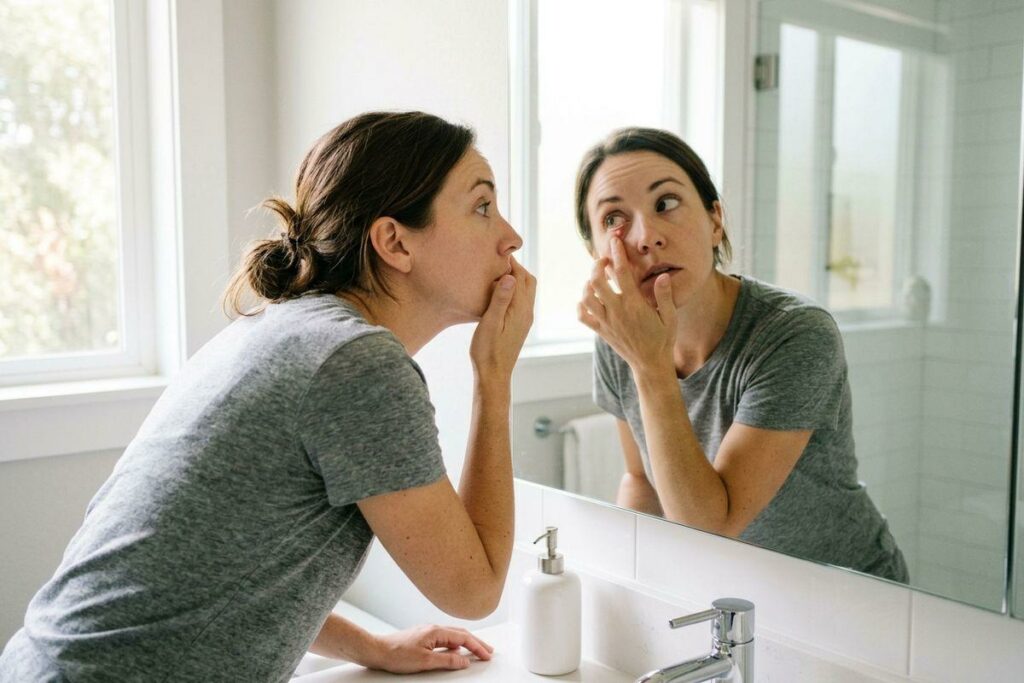
A stye is a tender red bump that forms when an oil gland along your lash line gets blocked and irritated. It tends to show up fast, sometimes overnight. And the first question most people ask has nothing to do with the bump itself. They want to know whether they’re about to pass it to everyone at the office.
Styes aren’t contagious, so you can head to work or school without keeping your distance from anyone. That bump likely didn’t come from a coworker, and your kid didn’t pick one up on the playground. A sore lid that hangs around for more than a couple of days is still worth having someone look at, and any change in your vision alongside it needs same-day attention.
Why Styes Aren’t Contagious
The bacteria behind a stye already live on everyone’s skin, including yours right now. Sharing a desk or a sandwich with someone who has one won’t hand you the same bump.
A stye needs a blocked oil gland too. Healthy lids clear those oils on their own throughout the day, which is why you can carry the same bacteria for years without a single stye.
How Styes Differ From Pink Eye
Pink eye is the one people mix up with a stye. It spreads through shared towels and surfaces, and that’s why kids get sent home from school with it. A stye stays in the gland where it started, so nobody needs to stay home.
What Leads to a Stye in the First Place
Most styes trace back to a gland that stopped draining well. Daily habits often play a part, like rubbing your eyes with unwashed hands after hours on a screen, or falling asleep in yesterday’s makeup because the evening got away from you. That eyeliner rolling around the bottom of your bag since last spring isn’t doing your lids any favors either.
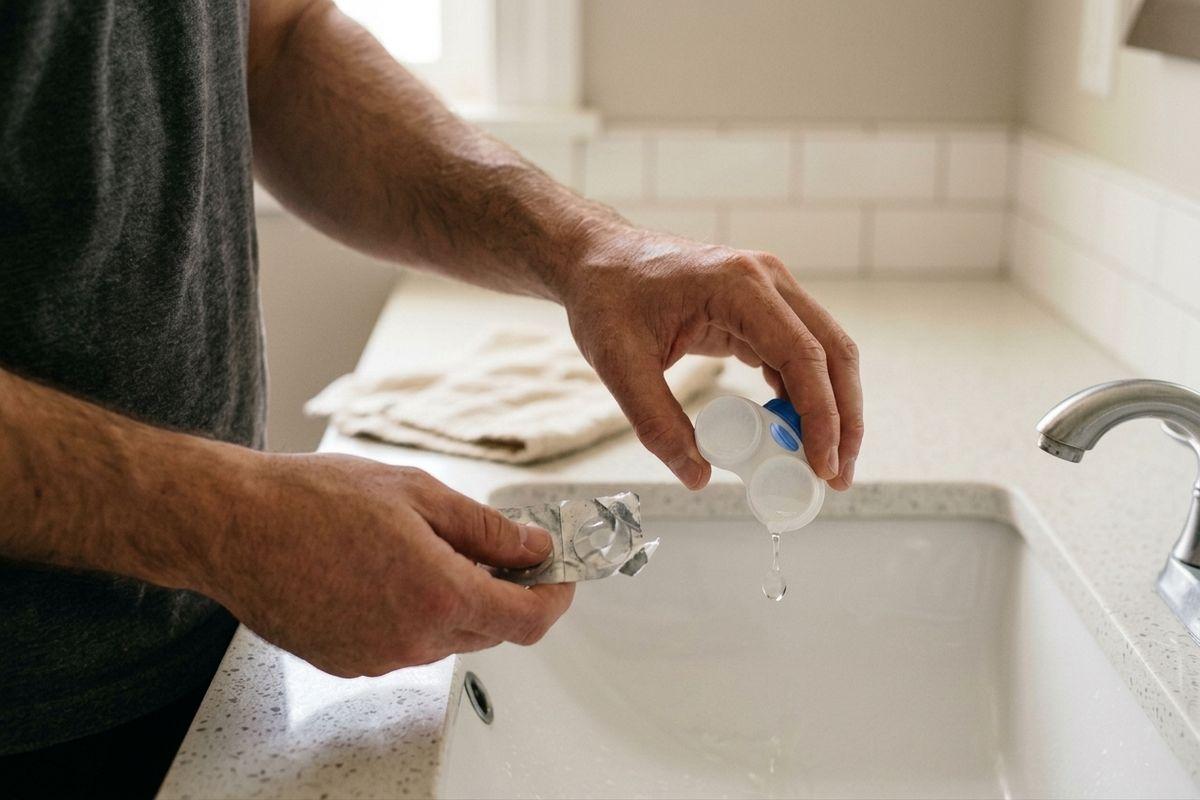
Contact lenses come up a lot. Wearing lenses past their replacement schedule or skipping cleaning steps can leave more debris along the lid margin than your glands can handle. The same goes for a case you’ve had longer than you can remember.
Pillowcases matter more than people expect. Oils and bacteria build up on fabric night after night, and your face spends roughly a third of every day pressed into it. Washing it weekly and reaching for your own towel instead of the shared one by the sink can help.
Stye Symptoms to Watch For
Most styes develop over a day or so, and a few signs usually turn up together:
- A red, tender bump near your lash line
- Swelling across the eyelid
- A watery eye that makes your screen look blurry
- Sensitivity to bright light
- Crusting along your lashes in the morning
How a Stye Differs From a Chalazion
A stye feels sore and looks red from the first day. A chalazion builds slowly, sits deeper in the lid, and often doesn’t hurt at all. Plenty of people spot one in a photo before they ever feel it.
Both can happen when the oil glands in your lids stop draining well, and ongoing lid care can help with either one.
How to Treat a Stye at Home
A warm compress does most of the work, and the routine is short enough to fit between emails:
- Wash your hands, then hold a warm compress against the closed lid.
- Keep it there for 10 to 15 minutes, 3 or 4 times a day.
- Clean gently along the lash line afterward.
A few things can drag out the healing, so leave these alone while the bump settles:
- Don’t squeeze or pop it, however tempting it looks in the mirror.
- Pause eye makeup and contact lenses until the swelling goes down.
- Throw out any mascara you used in the days before the stye appeared.
Styes in Kids
Kids can get styes at any age, and care is much the same as for adults. Warm compresses, a gentle wipe along the lashes, and a reminder to wash their hands before they rub their eyes cover most of it. Younger kids rarely sit still for 15 minutes, so shorter compresses more often can work better. Bring up any bump that keeps returning at their next children’s eye exam.
When to See an Optometrist About a Stye
Home care clears many styes within a few days. If yours hasn’t started improving after 24 to 48 hours, book a visit rather than waiting it out. Styes left for weeks get harder to treat, and we’d much rather see you early than after a month of compresses that went nowhere.
Come in sooner if any of this shows up:
- Redness spreading across your lid or onto your cheek
- A fever along with the swelling
- Any change in your vision
- Styes that keep coming back in the same spot
Your optometrist examines the lid under magnification to see what the gland is doing. Depending on what turns up, care may include an ointment, in-office drainage, or a lid routine that keeps the glands clearer going forward.
Don’t Wait Out a Stubborn Stye
You can stop worrying about spreading a stye, but it’s still worth acting on a bump that’s still there after a couple of days. Reach out to Capitol Optometry, and we’ll take a look, sort out whether it’s a stye or a chalazion, and talk through the habits worth adjusting. Book your appointment today and get back to comfortable mornings tomorrow!