

Key Takeaways
- Myopia, or nearsightedness, makes faraway objects look blurry and often shows up during the school-age years.
- Genes play a large role, and the odds of a child developing myopia rise when one or both parents are nearsighted.
- Daily habits like outdoor time and screen breaks can help protect your child’s eyes.
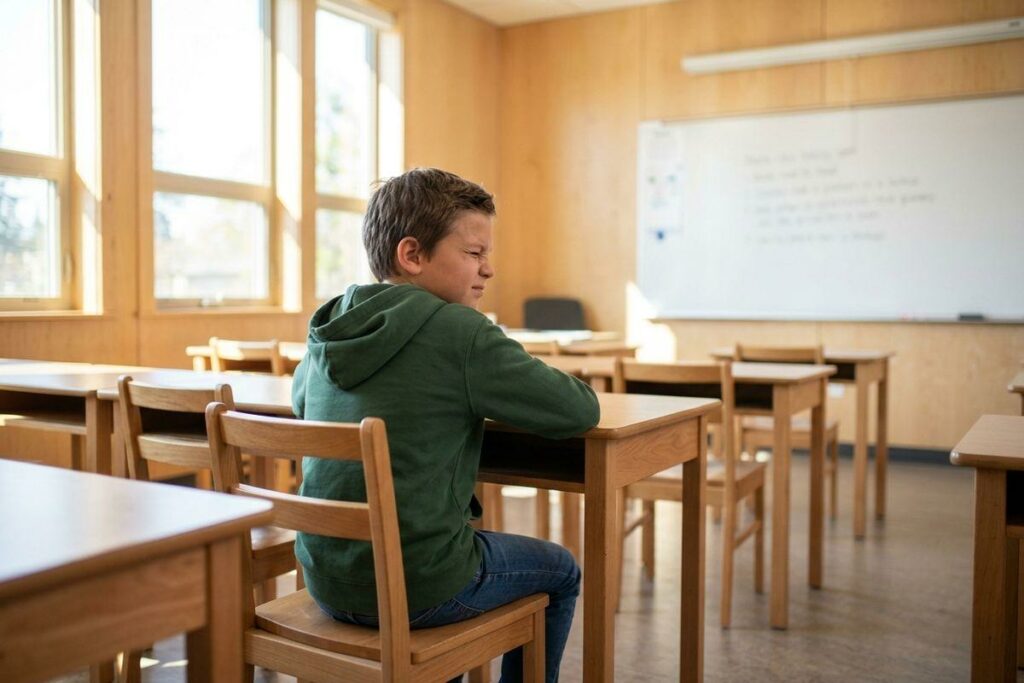
- Early signs include squinting, sitting close to the TV, and headaches.
- Routine eye exams help catch changes early and open the door to myopia control options.
Myopia Has a Genetic Component
If your child comes home from school and holds their tablet a little closer than usual or squints at the TV from across the room, you might wonder if they’re developing nearsightedness. At Capitol Optometry, we hear this question from parents often, especially from those who have myopia themselves.
Myopia does have a strong genetic link, so a child with one or two nearsighted parents has a higher chance of becoming nearsighted themselves. However, daily habits still shape how vision develops. Children’s eye exams can help you stay ahead of any changes.
What Myopia Means for Your Child’s Vision
Your kid can read a book up close with no trouble, but they see the soccer scoreboard across the field as a fuzzy blur. That’s a sign that they have myopia, also commonly called nearsightedness. Myopia causes distance vision to become blurry, while near vision remains unaffected.
Myopia often starts during the school-age years. It happens when the eye grows a little too long from front to back, causing light to fall in front of the retina (a tissue at the back of the eye that sends signals to the brain).
The Genetic Link Behind Nearsightedness
Myopia tends to run in families. If nearsightedness shows up in your family tree, your child may carry a higher chance of it too.
The pattern is pretty clear. A child with one nearsighted parent has a greater chance of developing myopia, and that chance climbs higher when both parents have the condition.
Is Myopia Passed Down from Mom or Dad?
Either parent can pass along the tendency for nearsightedness. It isn’t tied to just one side of the family.
When both parents are nearsighted, a child’s risk goes up. However, their fate isn’t set in stone. Genes load the dice, but daily habits still shape how things play out.
How Lifestyle Shapes Your Child’s Eyes
Genes aren’t the whole story. The way your child spends the day matters too, especially for kids who already carry a higher risk.
Long stretches of close-up work, like reading or tablet time, can nudge at-risk eyes towards developing the condition, as does significant screen time. On the other hand, time spent outdoors seems to work the other way around, reducing a child’s risk of developing myopia.
Steps You Can Take at Home
You have more influence on your child’s eye health than you might think. A few small routines can support your child’s eye health day to day.
Outdoor Time & Screen Balance
Aim for 2 or more hours of outdoor play each day. Sunlight, movement, and looking off into the distance all give young eyes a helpful break.
Indoors, try the 20-20-20 rule. Every 20 minutes, your child should look at something 20 feet away for 20 seconds. They should also keep books and screens about an arm’s length from their face.
Early Signs to Watch For
Kids don’t always say their vision is blurry. They just adapt. Keep an eye out for these clues that your child is facing vision challenges:
- Squinting to see distant objects
- Sitting very close to the TV
- Headaches or trouble seeing the board at school
If you notice any of these issues, it may be time to schedule an eye exam.
When to See an Eye Doctor in Sacramento
Routine exams are a smart move for kids with nearsighted parents. Regular checks help catch subtle changes before they start affecting schoolwork or play.
As your eye doctor in Sacramento, we can track how your child’s vision shifts over time and talk you through myopia control options that fit your family. Early attention gives you more ways to help slow those changes down.
At Capitol Optometry, our team enjoys working with kids and busy parents alike. Book an appointment with an eye doctor in Sacramento today.