Kids’ eyes do a lot of growing between the high chair and high school. Most of that growth happens quietly, and your child probably won’t mention it if something starts to feel off.
Regular eye exams can help you keep up with those changes, whether your kid ends up needing their first pair of glasses or could benefit from myopia management down the road. Your child should have their first eye exam between 6 and 12 months old, a second between ages 3 and 5, and then an exam every year from ages 6 to 17.
Why Kids’ Eye Exams Matter
Kids rarely complain about blurry vision. If the whiteboard has always looked a little fuzzy, your child likely assumes everyone sees it that way.
Vision problems can also hide behind other behaviors. A short attention span or fidgeting during reading time can come from eyes working too hard, and those signs can look a lot like ADHD.
Some conditions don’t show obvious signs at all. Amblyopia, often called lazy eye, develops when the brain starts favoring the stronger eye. Treatment usually works better when it starts early.
Your Child’s Eye Exam Schedule by Age
Each stage of childhood comes with its own vision milestones, so we time exams around them.
Eye Exams for Babies (6 to 12 Months)
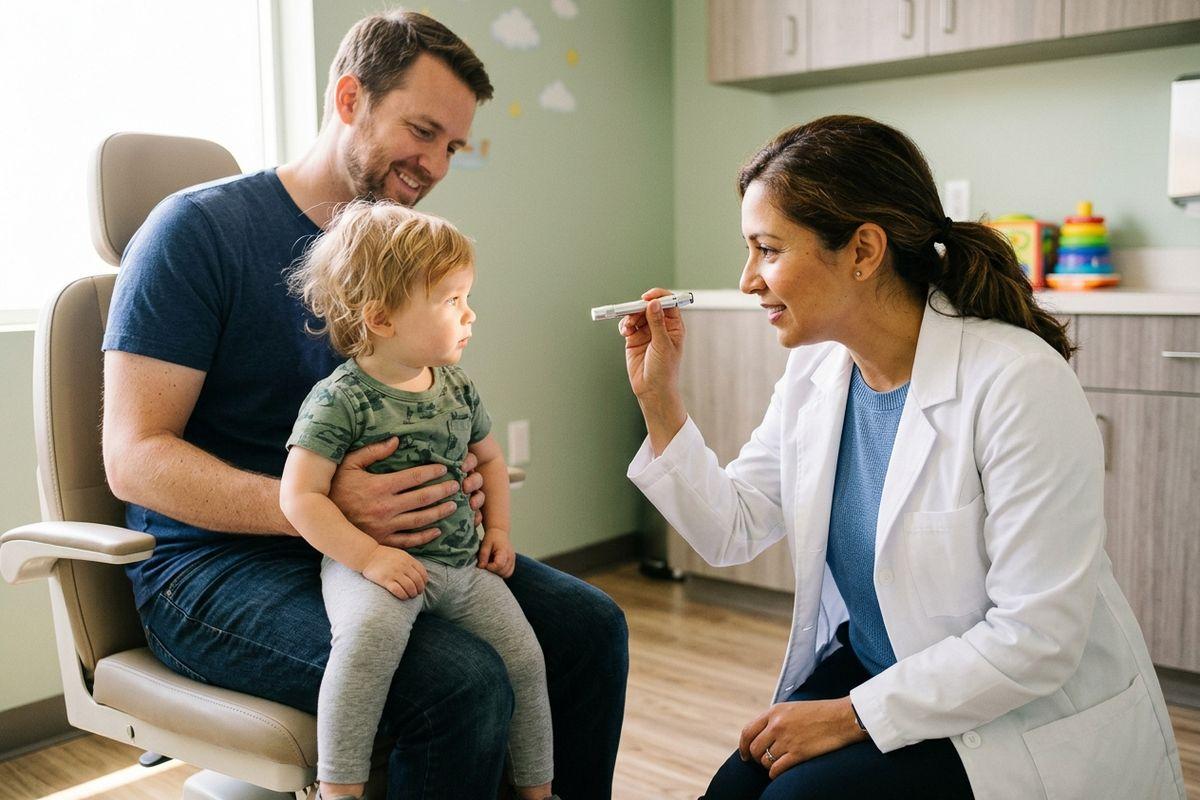
Your baby doesn’t need to talk or know their letters for this first visit. We use lights and toys to see how their vision is developing and whether their eyes move and line up the way they should.
This exam also gives your optometrist a baseline. Every future visit gets compared against it.
Eye Exams for Preschoolers (3 to 5 Years)
Plan the next exam for sometime before kindergarten. That timing leaves room to address anything that could make learning to read harder.
Picture charts and simple matching games keep things playful, so the alphabet is optional. At this age, we can also check depth perception and color vision.
Eye Exams for School-Age Kids & Teens (6 to 17 Years)
Once school starts, book an eye exam every year. Kids grow fast, and their prescription can change from 1 school year to the next.
Does your child wear glasses or contact lenses? We may suggest checking in more often so their prescription keeps up with their eyes.
Signs Your Child Needs an Eye Exam Sooner
You see your kid more than anyone, so you’ll often notice small changes first. Watch for these habits around the house:
- Squinting
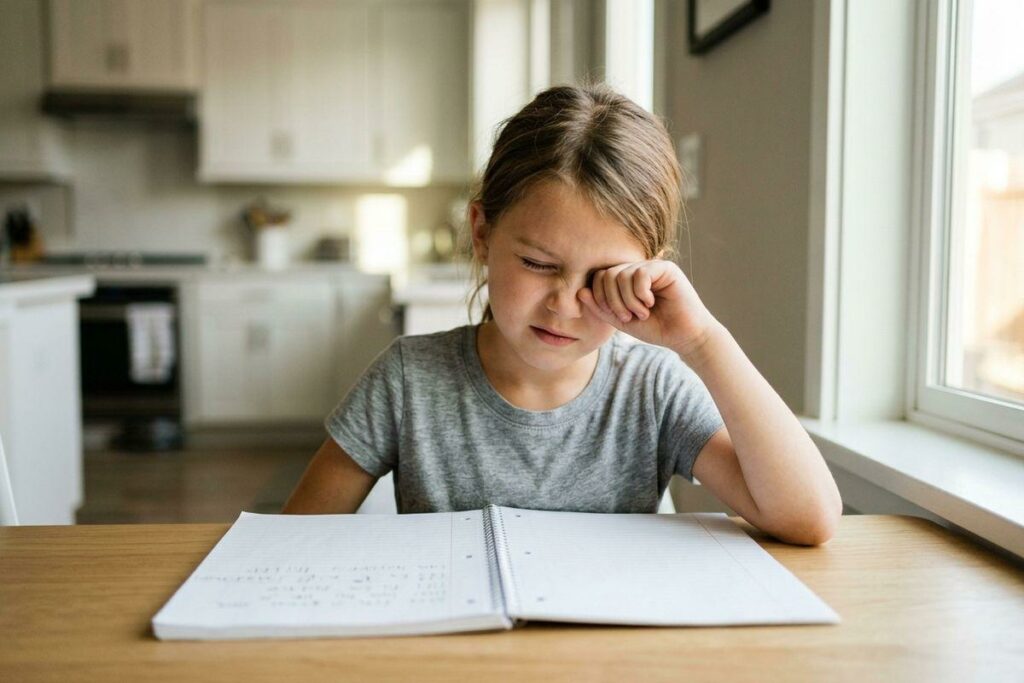
- Rubbing their eyes often
- Tilting their head to see
- Covering an eye
- Sitting close to the TV or tablet
- History of car sickness
Homework time can bring out a few more signs:
- Headaches after reading
- Losing their place on the page
- Rereading lines
- Avoiding reading or other close-up work
What to Watch for in Babies
Babies can’t tell you anything’s wrong, so pay attention to how their eyes look and move. Book a visit if you notice:
- An eye that turns in or out
- Lots of tearing
- Sensitivity to light
- Eyes that don’t follow your face or a toy
- Closing one eye
School Vision Screenings vs. Comprehensive Eye Exams
School vision screenings take just a few minutes and can flag some problems, especially trouble seeing far away. Still, passing one doesn’t rule out a vision problem.
A comprehensive eye exam goes further. Along with how clearly your child sees, we look at how well their eyes focus and work together, plus the health of the eyes themselves.
What Happens During a Kids’ Eye Exam
We start with a quick chat about your family’s eye history and anything you’ve noticed at home. Then the fun part begins, and your child might follow a light or tell us which way a picture is pointing. Sometimes we’ll use dilating eye drops to get a better look inside the eye.
Those drops can make bright light feel uncomfortable for a few hours. Toss a pair of kids’ sunglasses in the car for the ride home.
How to Help Your Child Feel Comfortable at the Eye Exam
Talk through the visit a day or 2 ahead. Let your child know they’ll look at pictures and that there aren’t any wrong answers.
Book the appointment for a time when your child is usually rested and fed. (A hungry, tired kid isn’t anyone’s favorite exam buddy.) Feel free to bring along a favorite stuffed animal or book.
Starting exams early helps too. By the time your child is in school, we’re familiar faces, and the exam chair feels a lot less mysterious.
Get Your Kid’s Eye Exams on the Calendar
Our team sees kids of all ages, from tiny first-timers to teens who need an updated prescription before the next semester. We’ll go at a pace that works for your family, and if glasses are part of the plan, your child can pick out frames they’re excited to wear.
Book your child’s eye exam with Capitol Optometry, and we’ll help you figure out what their eyes need this school year.